Height: 1ft 11in - 2ft 3in
Weight: 65-100lbs
Lifespan: 9 - 12 Years
- Affection5/5
- Kid-Friendly5/5
- Stranger-Friendly2/5
- Dog-Friendly3/5
- Barking Amount3/5
- Grooming Difficulty1/5
- Shedding Amount2/5
- Easy to Train2/5
- Can Be Alone3/5
- Exercise Need4/5
- Cold Tolerance4/5
- Heat Tolerance4/5
- Apartment-Friendly3/5
Curly-Coated Retriever Information
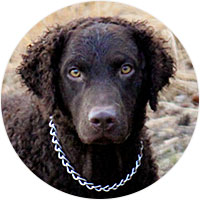
One of the oldest types of retrievers, this breed is easily identified by his extremely tight, water-resistant curls, which can be black or liver in color. A multi-purpose pup, the Curly-Coated Retriever works very hard and can retrieve in the iciest of waters. He is agile, strong and highly intelligent.
This breed is great for families who enjoy the outdoors and like to stay active. If the Curly-Coated Retriever doesn’t get adequate exercise, he starts to get bored and can turn to destructive behavior.
Can Curly-Coated Retrievers be apartment dogs?
Curly-Coated Retrievers aren't ideal for apartments, but they can live there if they get enough chances to play in a larger space nearby.
Can Curly-Coated Retrievers be left alone?
While Curly-Coated Retrievers prefer to be around their owners, they can do fairly well when left alone if necessary.
Are Curly-Coated Retrievers good with kids?
Curly-Coated Retrievers are typically excellent with kids. As with any dog, supervise them around children, but they are often very gentle.
Are Curly-Coated Retrievers friendly with strangers?
Curly-Coated Retrievers tend to be uncomfortable with strangers. They need extra socialization with people outside the family.
Do Curly-Coated Retrievers get along with other dogs?
Although Curly-Coated Retrievers will mostly get along with other dogs, they may have some issues that socialization can help.
Do Curly-Coated Retrievers bark a lot?
As far as dogs go, Curly-Coated Retrievers bark an average amount. Expect barking to alert you, get attention, or react to strangers and other dogs.
Do Curly-Coated Retrievers shed a lot?
The Curly-Coated Retriever isn't a heavy shedder. Some brushing and occasional cleaning should prevent much hair buildup.
Do Curly-Coated Retrievers need a lot of grooming?
With a Curly-Coated Retriever you won't need to dedicate extra time to special grooming. Their coats are easy to care for.
Do Curly-Coated Retrievers need a lot of exercise?
The Curly-Coated Retriever has a good amount of energy and needs walks and play to stay happy.
Are Curly-Coated Retrievers easy to train?
Most Curly-Coated Retrievers are stubborn and take extra work to train. They can still learn, but it takes more effort.
Can Curly-Coated Retrievers handle cold weather?
Curly-Coated Retrievers do well in cold weather. You may need to protect their paws, but they handle colder climates well.
Can Curly-Coated Retrievers handle hot weather?
Curly-Coated Retrievers do well in hot climates and can stay out longer without overheating.